
 Texto
Texto
Technical assistance is prevalent in legal regulations and public policies; however, a study indicates that it does not adequately reach rural producers
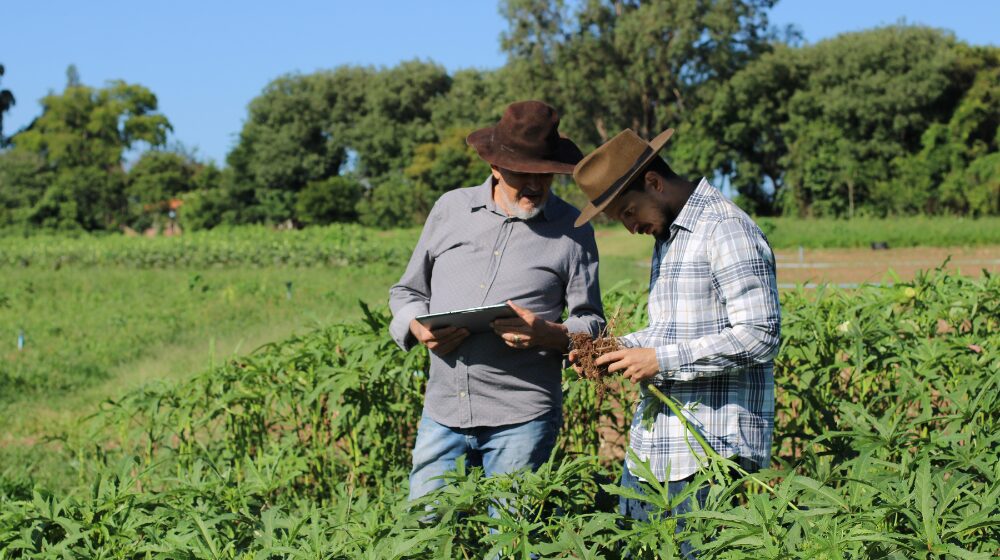
The Technical Assistance and Rural Extension (ATER) services play a critical role in spreading efficient agricultural practices and technologies that can help boost productivity in rural areas. ATER professionals also provide valuable support to rural producers by advising them on government programs, credit facilities, and legal requirements. Additionally, they encourage producers to adopt more sustainable production models that contribute to the restoration of ecosystems.
A survey conducted by the Instituto Escolhas identified 92 current Brazilian laws, regulations, and federal policies that reference ATER (Technical Assistance and Rural Extension) as an implementation tool in various economic industries, including agriculture, livestock farming, and forest management, among others. This total does not include legal instruments that directly govern public policy on ATER, such as the National Policy for Technical Assistance and Rural Extension for Family Farming and Agrarian Reform ((PNATER, in its Portuguese acronym).
According to the Instituto Escolhas, over 30 public bodies and entities require ATER services to implement their respective policies, plans, and programs. Notable examples include the Brazilian Program for Strengthening Family Farming, the Technology Innovation Incentive Program in Agricultural Production, the National Program for Access to Technical Education and Employment, the Aquilomba Brasil Program, and the Universalization Fund for Telecommunications Services.
The Federal Constitution, enacted in 1988, highlights the significance of ATER (Technical Assistance and Rural Extension) by recognizing it as one of the foundational components of agricultural policy that should be included in planning and implementation, alongside rural credit, agricultural insurance, and incentives for research and technology.
Public policies and other initiatives aimed at providing free access to ATER (Technical Assistance and Rural Extension) currently have limited coverage in Brazil. According to the most recent Agricultural Census conducted by the Brazilian Institute of Geography and Statistics (IBGE) in 2017, 80% of the country’s more than 5 million agricultural establishments did not benefit from ATER services. This figure is even higher in certain regions, with 92% of establishments in the Northeast and 90% in the North lacking access to ATER.
When free, quality Technical Assistance and Rural Extension (ATER) services are limited, progress is restricted to those who can afford them. In contrast, others, who cannot pay for it, are left behind,” said Jaqueline Ferreira, Research Director at Instituto Escolhas and coordinator of the mapping project. “The most affected are vulnerable groups such as family farmers, settlers, Indigenous peoples, and Quilombola communities.” The Census indicates that 82% of family farming units do not receive ATER services.
The reduced prominence of technical assistance policies is concerning, particularly in light of the necessity to adopt sustainable, regenerative, and low-carbon production models that foster social justice. Additionally, ATER serves as a critical mechanism for responding to climate emergencies.
In May 2024, severe flooding resulted in numerous fatalities and left thousands homeless throughout cities in Rio Grande do Sul. The disaster also had a significant impact on rural areas. According to Emater/RS, over 206,000 properties suffered losses in production, infrastructure, and the quality of former agricultural land. In response to these challenges, the federal government allocated US$1.93 million in extraordinary credit — funds designated for urgent situations, such as public emergencies — to ATER in the state, providing crucial support during this period.
Please click here to view the mapping created by Instituto Escolhas on ATER.