
 Texto
Texto
Study shows 2,274% increase in herbicide use for soybean production
 herbicidas soja
Brazil’s prominent position in the global soybean market can be attributed in large part to the implementation of no-till farming practices. By minimizing soil disturbance, Brazilian grain producers can mitigate erosion, enhance water infiltration in cultivated areas, and retain essential nutrients. However, this technique is mainly used alone in the country, without its combination with other soil conservation and recovery methods, such as crop rotation.
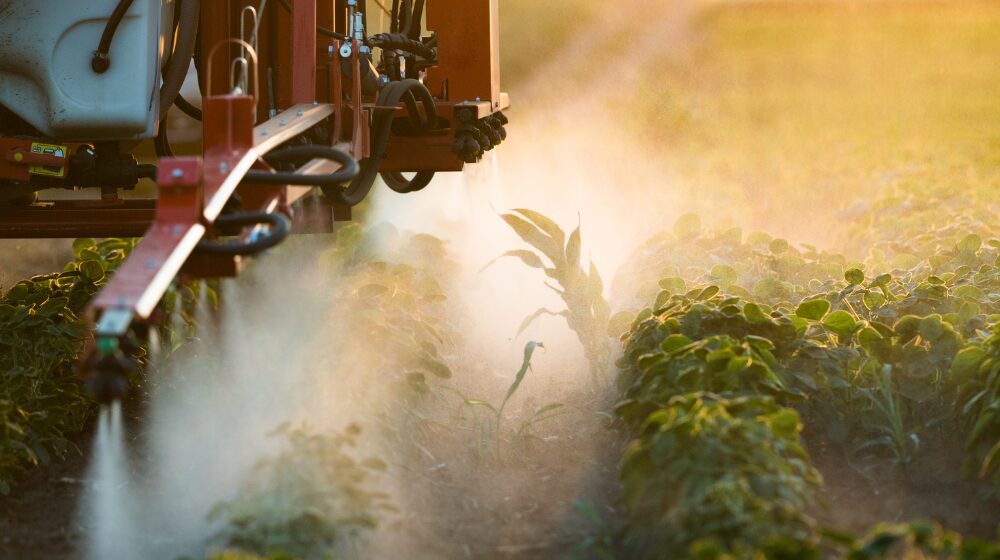
Among the consequences of the widespread adoption of incomplete no-till farming is the increasing use of herbicides to control weeds in soybean crops, according to the study “How can soybeans lead the transition of Brazilian agriculture?”, launched this Monday (13) by the Instituto Escolhas in partnership with the Folio Institute. Over the past 30 years, the estimated use of herbicides in grain production has increased by 2,274%. Between 1993 and 2023, the area under no-till farming increased by 11% per year, a rate equivalent to the percentage increase in the use of synthetic herbicides in soybeans, according to the survey.
When integrated systems, such as the No-Till Farming System, are not considered, implementing isolated no-till practices may lead to adverse soil outcomes, including compaction and an increased reliance on herbicides for weed management. According to Jaqueline Ferreira, a coordinator of the Instituto Escolhas’ study, “We are essentially substituting one detrimental effect (resulting from soil disturbance) with another (stemming from intensive pesticide use).”
She explains that adopting the No-Till Farming System, which involves rotating crops, is an effective way to reduce synthetic herbicide use in soybean farming, especially since bioherbicides are not yet commercially available. Jaqueline Ferreira adds that heavy herbicide application diminishes the soil’s microbial diversity, which may harm its overall productivity.
A study by Instituto Escolhas, published in June, highlights how the increased use of synthetic input has affected producers’ profits. Back in 1993, 1 kg of pesticide was enough to yield 23 bags of soybeans, but by 2023, it only produced seven bags. Additionally, from 2013 to 2023, the costs of seeds, pesticides, and fertilizers increased by 8% annually nationwide.
The recent study conducted interviews with 34 farmers from Brazil’s principal soybean-producing states — Mato Grosso, Goiás, and Paraná — and conducted site visits to their properties, which range in size from 16 to 19,000 hectares and collectively cover 88,000 hectares. The surveyed group includes conventional, organic, and regenerative producers. The primary objective was to assess which soil conservation or regeneration practices they employ or fail to employ, as well as their efforts to reduce the use of synthetic inputs such as pesticides and fertilizers.
All conventional producers interviewed practice no-till farming; however, only 31% implement crop rotation, 23% maintain diversity of living roots, 15% use green manure, and 15% adopt cover cropping. The prevailing production model does not demonstrate advancement toward the adoption of a comprehensive no-till farming system.
The declining effectiveness of Brazil’s soybean production system, as indicated by prior research, poses a potential threat to its global leadership in grain production. However, given that soybeans represented 46% of the Brazilian cultivated area in 2023 and remain the primary crop, they are positioned to play a pivotal role in leading Brazilian agriculture toward more sustainable practices in response to the climate crisis.
To achieve this objective, the Brazilian government, in collaboration with rural producers and the input industry, must set more ambitious goals, commitments, and public policies to guide the agricultural transition. The National Fertilizer Plan illustrates the significant gap between current practices and these goals. The planned investments of BRL 24.41 billion are focused on the production of nitrogen, phosphate, and potash fertilizers, within the traditional chemical/synthetic model (92% of the total). For emerging supply chains (such as organomineral and organic fertilizers), the projected investment is only 0.11% of the total.
The new study by the Instituto Escolhas proposes five ambitious commitments to boost the transition of Brazilian agriculture, namely:
1 – Make the increase of area of No-Till System (NTS) the main goal of the ABC+ Plan;
2 – Include plant defense in the ABC+ Plan’s goal of increasing the area that uses bio-inputs;
3 – Substantially increase investments by the National Fertilizer Plan in the industry and market for organo-mineral and organic fertilizers;
4 – Invest in research, development, and structuring of the biodefense industry and market;
5 – Invest in research, training, and the provision of technical assistance to support farmers in implementing more sustainable production practices
Please click here to read the Executive Summary of How can soybeans lead the transition of Brazilian agriculture?, a study conducted by the Instituto Escolhas.
Related
Technical assistance is prevalent in legal regulations and public policies; however, a study indicates that it does not adequately reach rural producers
Study reveals Brazil applies pesticides and fertilizers inefficiently and unsustainably in soybean farming
Urban agriculture can contribute to urban food security in times of climate crisis