
 Texto
Texto
Study reveals Brazil applies pesticides and fertilizers inefficiently and unsustainably in soybean farming
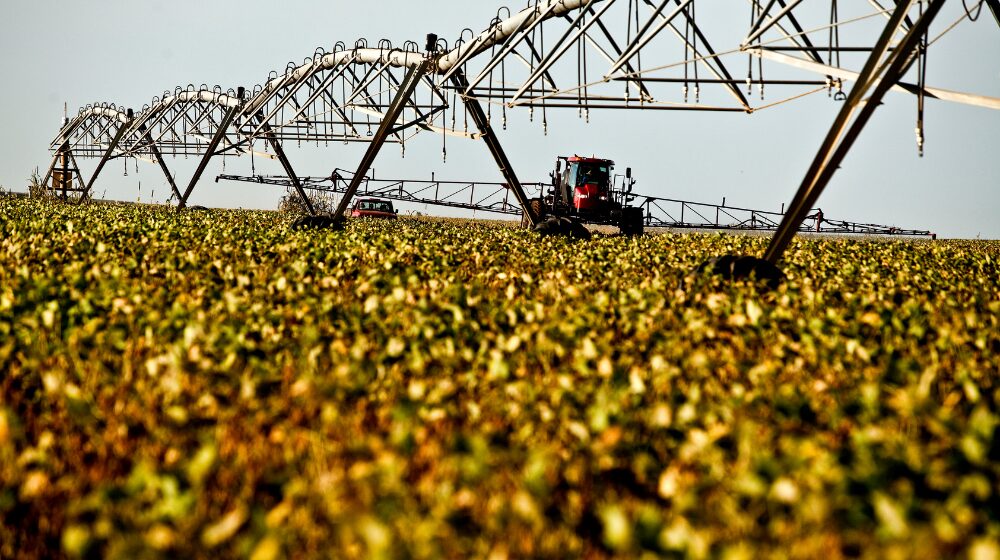
In 1993, Brazilian agricultural producers required 1 kg of pesticide to yield 23 bags of soybeans. By 2023, the same amount of pesticide produced only seven sacks. A comparable trend was observed with fertilizers containing phosphate and potash: in 1993, one ton of fertilizer yielded 517 bags of soybeans, whereas by 2022, this output had declined to 333 bags.
Between 1993 and 2023, the quantity of pesticides applied in Brazilian soybean production increased from 16 thousand tonnes to 349 thousand tonnes, representing a 2,019% rise. Regarding fertilizers, usage in grain production increased from 728 thousand tonnes in 1993 to 6 million tonnes in 2022, representing a 734% rise.
Since overtaking the United States in 2019, Brazil has been the world’s leading producer of soybeans. Its leading position is founded upon a system that relies substantially on the use of pesticides and fertilizers. Still, this approach is becoming less effective and increasingly unsustainable for both the economy and the environment. Brazil uses more pesticides and fertilizers per hectare than any of the other top five soybean-producing countries in the world.*
Brazil’s global prominence in soybean production, which is expected to reach a record 168 million tonnes in the 2024/2025 harvest, is attributed primarily to the increased use of inputs (such as pesticides and fertilizers) and an expansion of cultivated area, rather than productivity improvements. Between 1993 and 2023, the land dedicated to soybeans increased from 11 million to 44 million hectares, representing an average annual growth rate of 5%. In comparison, productivity gains were more modest, increasing by just 2% per year – from 2,120 kg of soybeans per hectare to 3,423 kg per hectare.
The information above comes from the study “Brazil as a world leader in soybean production: until when and at what cost?” published by Instituto Escolhas in collaboration with the Folio Institute. The research reveals that Brazil’s current approach to soybean production is diminishing the profitability of Brazilian producers.
“The producer is using more and more pesticides and fertilizers to produce less and less soy. This affects their income, which is also impacted by the price increase of these inputs,” says Jaqueline Ferreira, Research Director at the Instituto Escolhas and coordinator of the study. In 1993, just 11 bags of soybeans were enough for a producer to cover the costs of seeds, pesticides, and fertilizers. In 2023, he needed 23 bags of soybeans to cover these expenses.
A Research conducted by the Instituto Escolhas highlighted that genetically modified soybean seeds — introduced in the late 1990s with the promise of improved pest control and reduced pesticide use — have not met those expectations. As Jaqueline Ferreira explains, “In reality, the adoption of genetically modified seeds has gone hand in hand with increased pesticide usage.” Currently, 93% of the soybean seeds used in Brazil are genetically modified.
- LEARN MORE – Brazil is recognized as a leading nation in the global application of pesticides. According to the latest data from the Food and Agriculture Organization of the United Nations (FAO, 2022), Brazil accounted for 22% of total pesticide usage in agriculture worldwide. When compared with the five largest soybean-producing countries, Brazil exhibits the highest input use per hectare of cultivated land across all crops, with 12.63 kg/ha of pesticides. This contrasts with Argentina at 5.94 kg/ha, the United States at 3.02 kg/ha, China at 1.76 kg/ha, and India at 0.24 kg/ha.
Please click here to read the study.
Related
Study shows 2,274% increase in herbicide use for soybean production
Technical assistance is prevalent in legal regulations and public policies; however, a study indicates that it does not adequately reach rural producers
Urban agriculture can contribute to urban food security in times of climate crisis