
 Texto
Texto
Land tenure and environmental issues in Amazonas state could be resolved by allocating 85.5 million acres of public lands
 Notícias – site (3)
In the state of Amazonas alone, more than 34 million hectares (84 million acres) of land could potentially be set aside for the creation of protected areas. This is what our most recent publication, Same game, new rules: a land solution for the Amazon, shows. Featuring data on each of the region’s states, the report, which proposes a new land tenure policy for the Amazon, was produced in partnership with the Luiz de Queiroz College of Agriculture’s Public Policies Group (ESALQ/USP).
The findings of the study, released in another report published last month, show that 118 million hectares (291.5 million acres) of the Amazon are public lands pending allocation and therefore vulnerable to irregular occupation: 56.4 million hectares (139.3 million acres) of these lands are already occupied, while another 59.5 million hectares (147 million acres) could and should be allocated to the creation of protected areas, including areas under collective or communal ownership and conservation units.
“The country needs to muster the courage to face the land tenure problem in the Amazon head on and break the never-ending cycle of ‘invasion, clearance and claiming title’. And this change begins by allocating all public lands that have yet to be set aside to avoid the risk of illegal occupation”, defends Sergio Leitão, executive director of Instituto Escolhas.
“The regularization of already occupied areas should be assessed following different criteria to those adopted today, which end up encouraging new occupations. Regarding other areas, the idea is to provide definitive protection. And that is possible through the creation of conservation units and the demarcation of the lands of indigenous peoples and traditional communities”, he affirms.
The situation in Amazonas
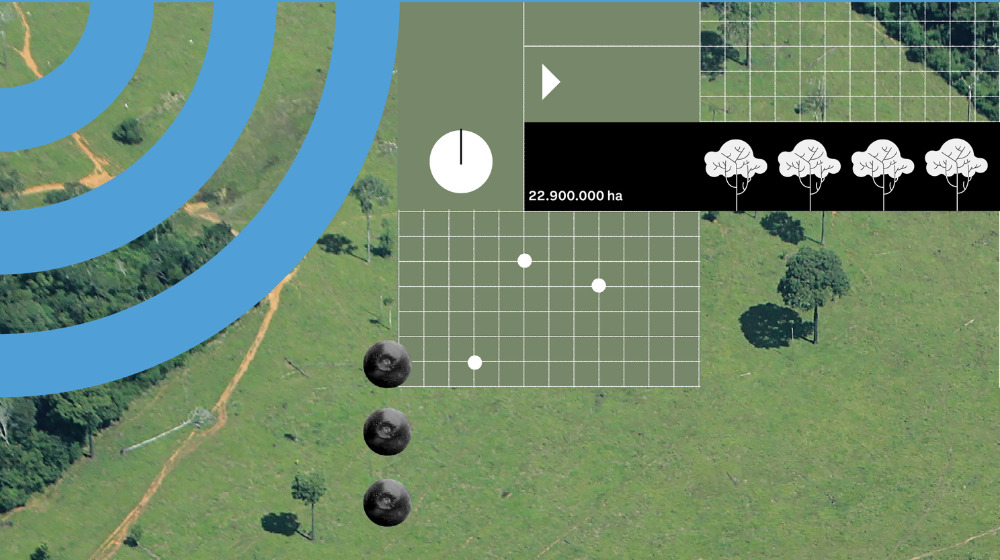
The state of Amazonas accounts for the largest area of allocatable lands: 34.6 million hectares (85.5 million acres) of public land that could potentially be set aside for the creation of protected areas; equivalent to around 58% of the Brazilian Amazon. According to our study, Amazonas has vast swaths of continuous areas with huge potential for conversion to conservation units and indigenous territories.
More than 2.13 million hectares (5.26 million acres) of land are areas under 2,500 hectares (6,175 acres) deforested before 2008 and registered in the Rural Environmental Registry (CAR). These areas meet two of the criteria set out in the current land regularization legislation covering the Amazon and can therefore be prioritized in analyses for this purpose.
Another 12 million hectares of land registered in the CAR are areas over 2,500 hectares and/or deforested after 2008. To be set aside for social use and land regularization, these areas require thorough individual assessments and possible changes in legislation.
Read the report here.
Related
Brazil attended COP-6 in Minamata without presenting an action plan to address mercury usage in mining
Study shows 2,274% increase in herbicide use for soybean production
Technical assistance is prevalent in legal regulations and public policies; however, a study indicates that it does not adequately reach rural producers
Study reveals Brazil applies pesticides and fertilizers inefficiently and unsustainably in soybean farming